
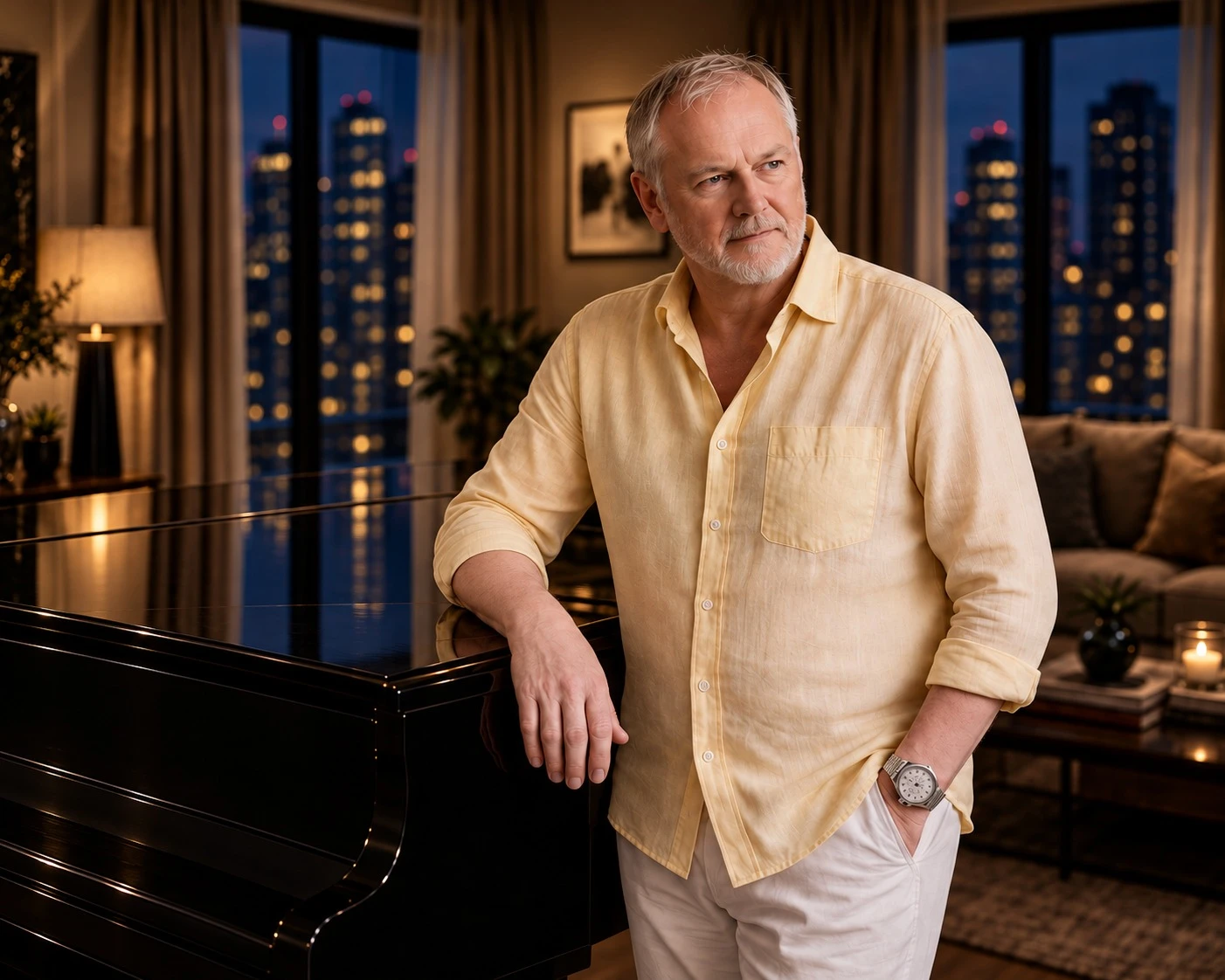
I've been a photographer for much of my life.
I started in the days of film, when you had to think carefully before pressing the shutter. Every exposure cost money, and you couldn't immediately look at the back of the camera to see whether you'd got it right.
Over the years, I've watched photography undergo an extraordinary transformation. From film to digital sensors, from darkrooms to sophisticated editing software, and now to systems capable of generating entire images from a written description.
The technology has changed almost beyond recognition.
But one thing hasn't.
Owning a camera doesn't make someone a good photographer.
You can give two people identical cameras, stand them in precisely the same place and ask them to photograph the same subject.
One might produce a perfectly competent but entirely forgettable picture.
The other might create something extraordinary.
The camera is the same. The subject is the same. Even the light may be the same.
So what's different?
The person behind it.
Their imagination, their judgement, their sense of composition, their understanding of light and, perhaps most importantly, their ability to recognise something worth capturing.
A camera makes photography possible. It doesn't guarantee a photograph worth looking at.
And I've been wondering why we sometimes seem to forget that principle when we talk about generative technology.
We've Been Changing the Tools for Centuries
Music has a fascinating history of technological progress.
Consider the piano.
Before its development around 1700, the harpsichord had been one of the principal keyboard instruments of European music. It produced its sound by plucking strings.
The piano introduced a fundamentally different mechanism. Hammers struck the strings, allowing musicians to control the dynamics through the way they played.
It wasn't simply a different sound. It expanded what a keyboard player could express.
Over the centuries, the instrument evolved into the magnificent concert grands we know today.
Then came electricity.
The electric guitar transformed popular music, making possible sounds, sustain and expressive techniques that had been difficult or impossible to achieve with conventional acoustic instruments.
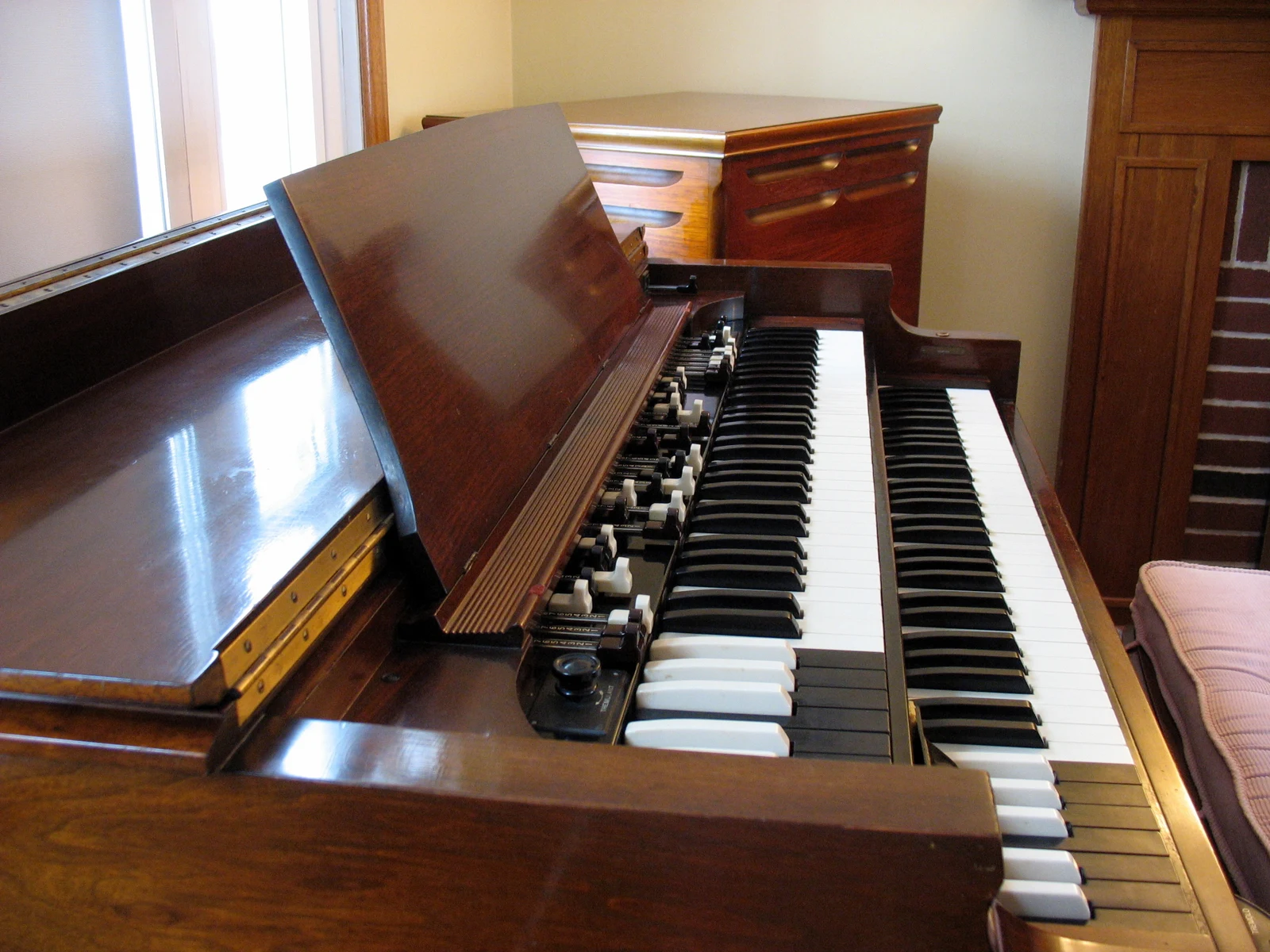
The Hammond organ, originally conceived as an alternative to the pipe organ, developed a musical personality of its own.
Add the rotating Leslie speaker, and suddenly there was that glorious, swirling sound that became part of jazz, gospel, blues and progressive rock.
I've loved that sound for decades.
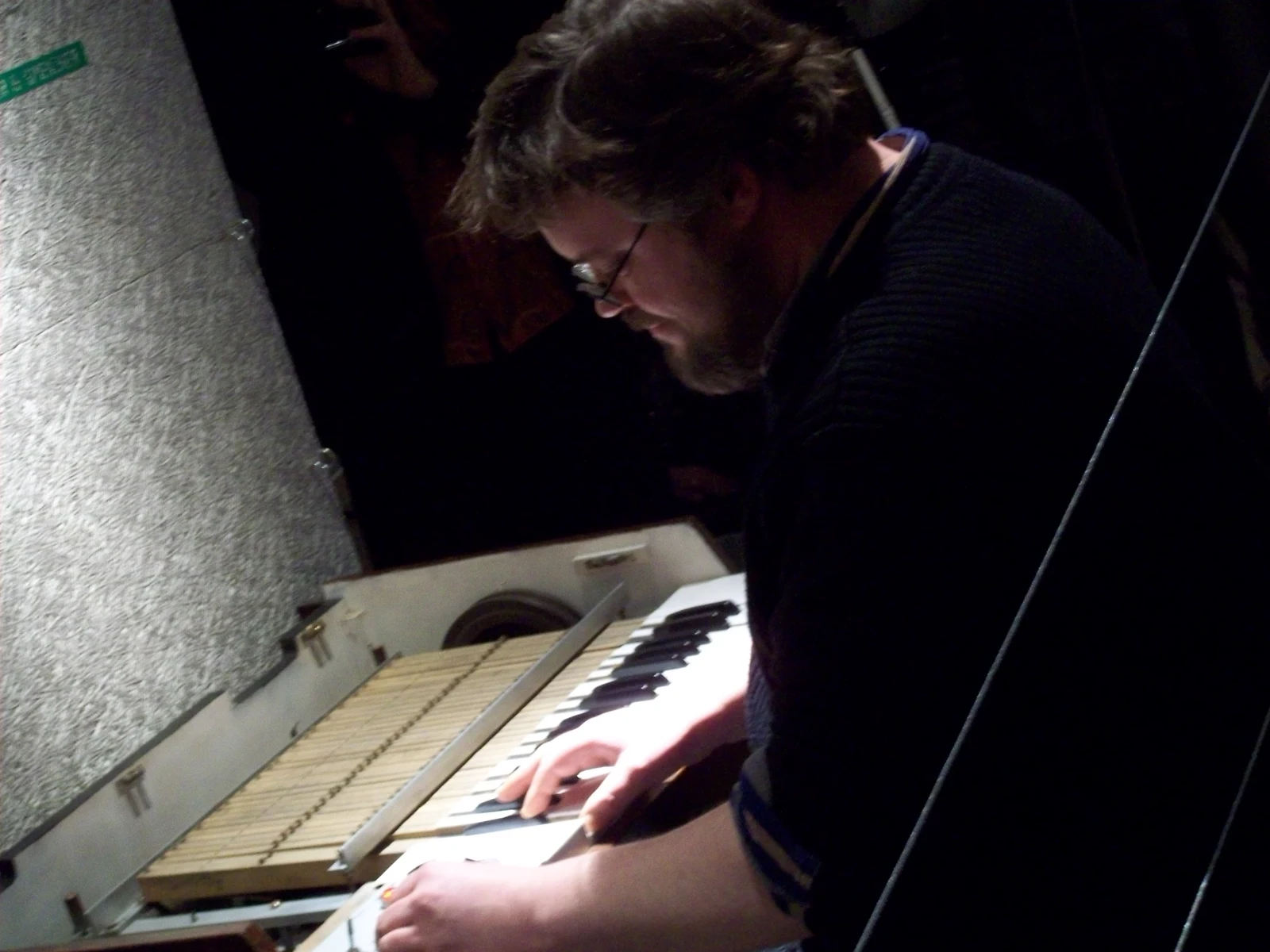
And then there was the Mellotron.
Now there's an interesting piece of technology.
The Mellotron used strips of magnetic tape containing prerecorded sounds. Press a key, and a tape played back a recorded note.
A keyboard player could suddenly produce the sounds of flutes, strings or choirs without having those musicians in the room.
It wasn't an orchestra.
It was a machine reproducing recordings of an orchestra.
Yet the Mellotron became one of the most distinctive and beloved instruments in progressive rock.
Nobody listening to those wonderful early recordings by bands such as King Crimson, Genesis or The Moody Blues would seriously suggest that the music had no artistic value because some of its instrumental sounds came from magnetic tape.
The technology expanded the composer's palette.
And the music was richer for it.
Then the Instruments Began to Disappear
Not literally, of course.
But their physical form became increasingly disconnected from the sounds they produced.
Synthesizers could create entirely new timbres or imitate familiar instruments.
Drum machines could reproduce rhythms without a conventional drum kit.
Electronic percussion pads allowed a musician to strike a small surface and produce the sound of a bass drum, snare, cymbal or an entire collection of percussion instruments.
I recently watched someone playing what looked rather like a tea tray.
Yet what came out sounded remarkably like a real drum kit.
I found myself smiling.
Here was another example of technology separating the physical instrument from the sound we associate with it.
And then came sampling.
A recorded sound could be captured, manipulated, played at different pitches and incorporated into an entirely new composition.
A single recorded note could become part of a complete musical arrangement.
The possibilities were enormous.
So were some of the arguments about what constituted a genuine performance.
But sampling, synthesizers and electronic instruments gradually became established parts of modern music-making.
Today, few people are surprised to discover that a film score contains sampled orchestral instruments or that a popular recording includes electronically generated percussion.
We have become accustomed to the technology.
We listen to the music.
The Singer Who Didn't Quite Sing That Note
Then, in 1997, came Auto-Tune.
Here was software capable of correcting the pitch of a recorded vocal performance.
A singer could deliver an otherwise excellent take, miss a note, and have that note corrected electronically.
When Cher released Believe in 1998, its deliberately exaggerated vocal processing helped make Auto-Tune famous.
And controversial.
Was this cheating?
Were singers being made to sound better than they really were?
Was the recording still an authentic performance?
Those were understandable questions.
But pitch correction became increasingly common, and modern recording technology now allows producers to adjust timing, pitch, phrasing and countless other details of a performance.
The recording we hear may be the result of dozens, sometimes hundreds, of decisions made long after the singer has left the studio.
And yet we still enjoy the music.
We don't generally demand that every recording be a completely unaltered representation of a single live performance.
We've accepted that recording itself is a creative process.
When a Voice Can Travel Around the World

Technology has also transformed the way musicians collaborate.
There was a time when recording with a particular singer generally meant arranging for that person to attend a studio.
Today, someone can record their voice on the other side of the world and send the recording electronically.
Distance is no longer the obstacle it once was.
And generative technology has taken this a significant step further.
A singer can provide a sample of their own voice, which can then be used, with their permission, as the basis for creating new vocal performances.
We use this approach at Sessions on the Green®, including with Parichad and other vocal contributors.
Parichad has been a singer and performer for most of her life, long before Sessions on the Green®. Her experience as a performer and our use of authorised generated performances based on recordings of her voice are both parts of her contribution.
It's an important distinction.
The source recording contains the person's actual voice. The subsequent performance may be generated using the characteristics of that voice, rather than being a recording of the person physically singing every note of the finished song.
The result can sound remarkably like the original singer.
And the possibilities for musical collaboration are extraordinary.
We can explore melodies, arrangements, harmonies and different interpretations without requiring everyone to be physically present in the same recording studio.
It allows us to work with vocal characteristics that have a genuine human origin while developing performances through new technology.
Of course, consent and transparency matter. A person's voice is part of their identity, and its use should be authorised and understood.
But the creative opportunity is remarkable.
Imagine a New Song by Cher
And now we arrive at a particularly interesting development.
The music industry is beginning to negotiate agreements under which artists may authorise the use of their voices in generative productions.
Imagine Cher licensing her voice for a new song.
The finished recording might sound unmistakably like Cher.
Yet she may never have physically sung the song.
The performance could have been generated using an authorised digital representation of her voice.
Would people buy it?
Would they love it?
Would they consider it a Cher recording?
I suspect the answers would vary enormously.
Some listeners might be delighted to hear new music featuring a familiar voice, particularly if the artist had authorised its use.
Others might feel that hearing the singer's actual performance is an essential part of their emotional connection with the music.
Neither reaction is unreasonable.
But it raises a fascinating question.
What, exactly, are we listening to when we hear a recording?
The sound of a particular voice?
The performance of a particular individual?
The composition?
The emotional experience?
Or some combination of all four?
These questions are no longer entirely theoretical. Major music companies and technology developers are already exploring licensed generative music and vocal experiences.
We are entering new territory.
And I suspect the answers will emerge gradually, as audiences decide what they value.
And Now We Have Generative Music
Which brings us to the latest development in this long history of musical technology.
Generative systems can now create remarkably sophisticated music from instructions, musical references and other creative inputs.
They can produce instrumental arrangements, vocal performances, harmonies and complete compositions.
And, predictably, there has been considerable criticism.
Some of it is justified.
There are legitimate concerns about copyright, the use of existing recordings to develop these systems, the livelihoods of professional musicians, the unauthorised imitation of artists and the enormous volume of material that can now be produced.
These questions deserve serious consideration.
But there is another criticism that I find much less persuasive.
The suggestion that music created with generative technology is automatically worthless, regardless of its quality or the creative work involved.
That seems to me rather like saying that a photograph has no artistic merit because a camera captured the image.
The comparison isn't exact.
Generative systems can contribute much more to a finished work than a conventional camera does. They can make musical and compositional decisions that would previously have required human performers or arrangers.
We should acknowledge that.
But it doesn't follow that the person directing the production has contributed nothing of artistic value.
Nor does it follow that every recording produced using generative technology is created in the same way.
What Actually Happens at Sessions on the Green®
I sometimes encounter the assumption that creating generative music consists of entering a few words, pressing a button and publishing whatever comes out.
And certainly, that can be done.
But it's not how we approach our work.
At Sessions on the Green®, we begin with an idea.
Sometimes it's a story.
Sometimes a memory.
Sometimes a particular musical atmosphere, an instrumental sound or an emotion we want to communicate.
We develop arrangements, explore different musical interpretations, refine vocal characteristics, adjust instrumentation, reshape passages and listen critically to what we've created.
Frequently, we reject a version and begin again.
We use generative technology alongside conventional production tools, including Logic Pro, to develop, edit, mix and master our recordings.
Our productions involve creative collaboration, and it's not unusual for us to spend eight hours on a recording, sometimes sixteen or more.
But I don't mention those hours as proof of artistic merit.
Spending sixteen hours creating something doesn't automatically make it good.
Neither does spending sixteen minutes make something bad.
What matters is the judgement exercised during the process and, ultimately, the quality of the result.
Technology can give us an extraordinary range of possibilities.
But we still have to decide which possibilities are worth pursuing.
And when to stop.
The Stories Technology Cannot Remember for Us
There's another part of our creative process that I haven't mentioned yet.
The words.
Generative technology can write lyrics, of course. Give it a subject, a musical style and a few instructions, and it can produce an entire song in moments.
Sometimes the results are surprisingly good.
But there's a difference between writing about an experience and having lived it.
Many of our songs at Sessions on the Green® begin with memories, observations and experiences accumulated over a lifetime.
Some are deeply personal. Others begin with something apparently insignificant — a conversation, a chance encounter, an unusual expression or a moment that has remained in my memory for decades.
The Singing Ferry, for example, grew from my memories of travelling in East Africa as a twelve-year-old boy. I can still recall the sounds and rhythms of the ferry crossing, more than sixty years later.
Those memories were there long before the technology existed to help us turn them into music.
And The Legend of Long Far Woman grew from a delightful expression Parichad used when we first met. Whenever something was a very long way away, she would describe it as being "long far."
Two simple words, remembered with affection, eventually became the inspiration for an entire song.
Technology didn't experience those moments.
We did.
And while generative systems can help us explore ways of expressing our stories, they cannot independently know what those experiences meant to us, or which tiny details have remained important over the years.
That's something we bring to the creative process.
We also care enormously about the clarity of our lyrics.
I've listened to plenty of contemporary recordings where the vocal is so heavily processed, or the words so indistinct, that I struggle to understand what the singer is saying.
That may be an intentional artistic choice, and there's certainly room for different approaches.
But it's not generally what we're trying to achieve.
When our music tells a story, we want listeners to be able to follow it.
We want the words to be heard, the meaning to be understood and the emotion to come through naturally.
We pay attention to the phrasing, the clarity of the vocal, the relationship between the words and the melody, and the way the arrangement supports the story rather than overwhelming it.
And we don't believe meaningful lyrics have to be complicated.
Sometimes a simple, truthful observation can communicate more than an elaborate collection of clever phrases.
Some of the most moving songs ever written use remarkably ordinary language.
Their power comes from what those words mean, and the way they're delivered.
Of course, not every Sessions on the Green® song is autobiographical. We also create imagined stories, romantic narratives and musical journeys that begin with nothing more than an interesting idea.
But even then, we draw upon our understanding of people, relationships, memories and emotions to shape what we're trying to say.
The words, the melody, the voice, the arrangement and the production all have to work together.
A wonderful lyric can be diminished by an indifferent melody.
A beautiful melody can lose its impact if the words are meaningless.
And even the finest arrangement may fail to communicate if the performance lacks emotional conviction.
For us, the challenge is to bring all those elements together until they feel like parts of the same story.
Technology can help us find the words, shape the music and create the performance. But it cannot have lived the life from which so many of our stories emerge.
That is something we bring ourselves.
Sometimes the Instruments Speak More Eloquently Than Words
One of the most interesting things we've discovered is that some of our most emotionally affecting productions are entirely instrumental.
There's no singer.
No lyric telling the listener what to feel.
Just music.
A saxophone carries a melody with the tenderness of a human voice.
A flugelhorn seems to breathe between phrases.
A piano hesitates, searches and finally finds its way home.
We approach these instruments as though they were people telling a story.
And listeners respond in ways that continue to astonish us.
They tell us that the music has brought tears to their eyes.
That it has reminded them of someone they loved.
That it has brought comfort during a difficult time.
That it has made them happy.
Sometimes they tell us that they've created their own story around the music.
I find that particularly moving.
Because it suggests that the music has become something more than a recording.
It has become part of someone's personal experience.
And whatever technology helped create the sound, the emotion experienced by that listener is entirely real.
Did It Move Us?
We have a simple benchmark at Sessions on the Green®.
Three questions might be asked about any recording.
Is it technically accomplished?
Is it musically interesting?
Is it beautifully produced?
But for us, there's another question that matters more than any of those.
Did it move us?
That's the question we return to throughout the creative process.
It applies equally to a love song, a progressive rock composition, a jazz ballad or an instrumental piece.
If the music doesn't communicate something meaningful to us, we keep working.
Sometimes we abandon it altogether.
And when we finally release something, we hope that what moved us might also move someone else.
It won't always happen.
Musical taste is wonderfully personal.
But when it does, when a listener tells us that a piece of music has touched their heart, that's the reward we value most.
The Technology Changes. The Ambition Doesn't.
I've spent much of my life looking through a camera viewfinder, trying to capture something worth seeing.
These days, I spend much of my time listening, trying to create something worth hearing.
The technology has changed enormously.
The ambition hasn't.
A magnificent camera doesn't guarantee a magnificent photograph.
A studio full of expensive instruments doesn't guarantee a wonderful piece of music.
And access to sophisticated generative technology doesn't guarantee a recording anyone will want to hear twice.
The tools provide possibilities.
The creative process involves deciding what to do with them.
And the audience ultimately decides whether the result has value.
I don't expect everyone to embrace generative music. Nor do I think everyone should.
There will always be people who prefer particular instruments, traditional performances or familiar ways of creating art.
That's perfectly reasonable.
But I hope we can distinguish between questioning a technology and dismissing everything created with it.
Because the history of music and photography suggests something worth remembering.
New technology doesn't automatically create great art.
But neither does it prevent great art from being created.
And perhaps, before deciding that a piece of music has no value because of the technology involved, we might do something wonderfully simple.
Listen to it.
Let it speak for itself.
And then decide.
Peter Pickering
Creative Direction & Executive Production
Sessions on the Green®
sessionsonthegreen.com
© 2026 Peter Pickering / Sessions on the Green®

