Her voice
Parichad brings the experience of a lifetime of singing to the studio. Her voice is warm, expressive and unmistakably her own, shaped by years of performing for real audiences long before Sessions on the Green® existed.

VOCALIST · CREATIVE PRODUCTION
Parichad is credited across Sessions on the Green® releases for Creative Production & Release Management, as well as appearing as a vocalist on selected recordings.
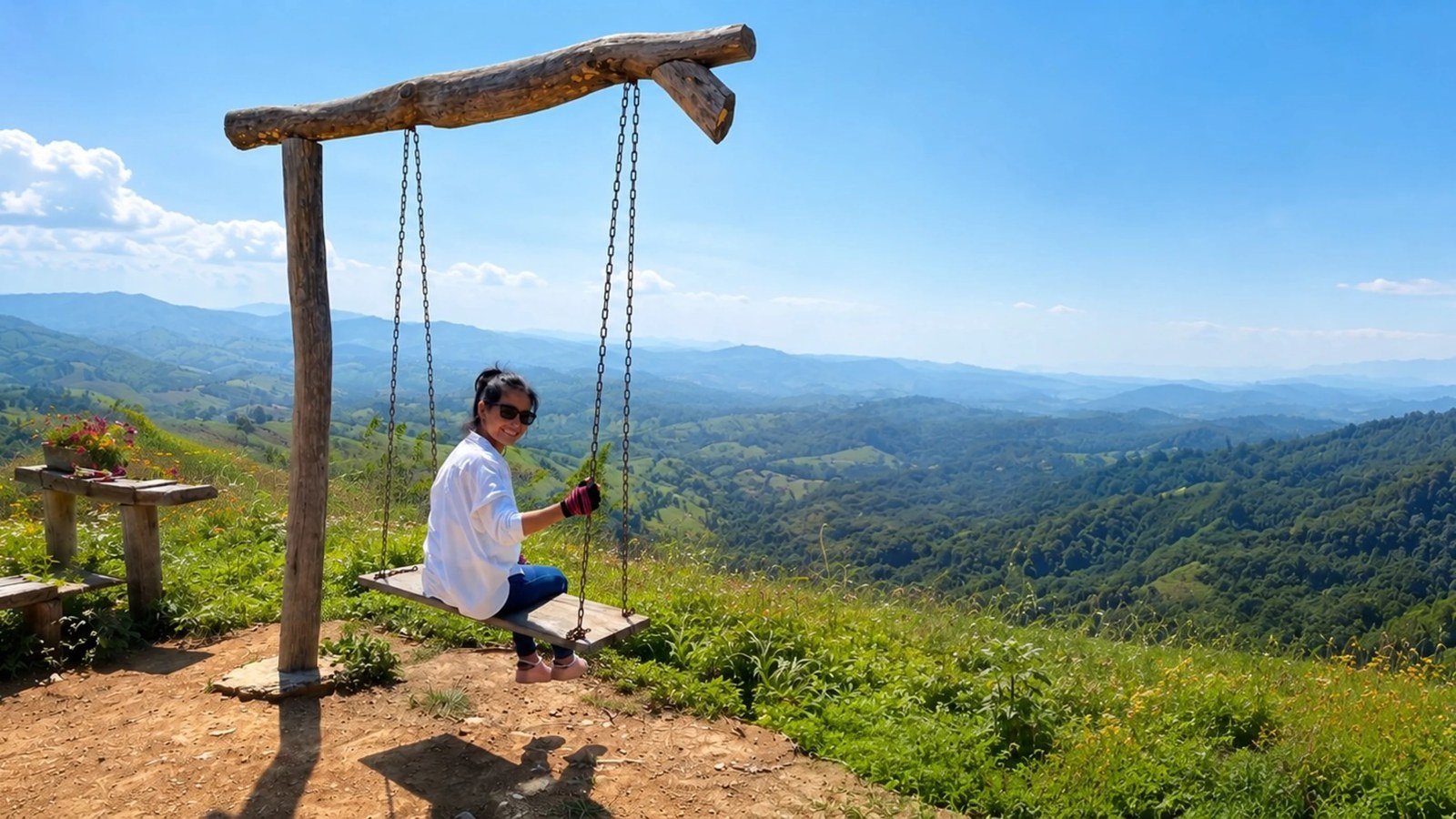
HER STORY
There is something unusual about telling Parichad's story: she rarely tells it herself.
Private by nature and remarkably modest about her own life, she can know someone for years before casually revealing a story that makes them wonder how it has never come up before. There has been a great deal of life behind that quietness — music, travel, business, family and experiences stretching between Cambodia, Vietnam, Thailand and Laos.
Born in Thailand into a Thai-Lao family, Parichad's family roots extend north to Luang Prabang, the historic royal capital of Laos. Within the Khongon family, their ancestry is traced to the royal bloodlines of Luang Prabang. It is a part of her family history that Parichad rarely speaks about.
Her life in music began in her teens...long before Sessions on the Green®.
She began singing professionally at 21 as part of a girl band in Thailand. It was an exciting life, but a demanding one — travelling long distances from one engagement to the next, performing at weddings, celebrations, events and venues, often returning late before doing it all again.
There were stages, lights, appreciative audiences and devoted admirers, but behind the glamour was a great deal of hard work. Eventually, the constant travelling and relentless schedule became tiring, and Parichad began looking for a different way to build a life around music.
With money she had earned from singing, she created her own cabaret restaurant. It became a thriving venue, with Parichad at its heart — running the business, performing herself and providing work for a number of other singers. It revealed another side of her character: independent, enterprising and quite capable of creating the opportunity rather than waiting for somebody else to provide it.
Years later, Peter Pickering first met Parichad in person as she walked towards him after stepping off a stage. He still remembers the confidence, the style, the extraordinary presence — and the sequins of her dress catching the lights and throwing reflections around the room.
“I remember thinking I was meeting a superstar. And I was.”
Today, music is part of Parichad's life in a very different way. She has already known the stage, the travelling, the applause and everything that comes with a professional performing life. Sessions on the Green® allows her to continue making music without needing to return to that world.
She is credited on Sessions on the Green® releases for Creative Production & Release Management and also appears as a vocalist on selected recordings.
Parichad brings the experience of a lifetime of singing to the studio. Her voice is warm, expressive and unmistakably her own, shaped by years of performing for real audiences long before Sessions on the Green® existed.
The songs Parichad helps bring to life tend towards melody, emotion and story. Sometimes intimate, sometimes joyful, they are selected because she connects with them — not because they fit a particular genre or formula.
Recording is a quieter world than the stages Parichad once knew. Performances are explored, shaped and refined until the feeling is right, with the freedom to try something again, change direction or simply leave a beautiful moment alone.
BEYOND THE MUSIC
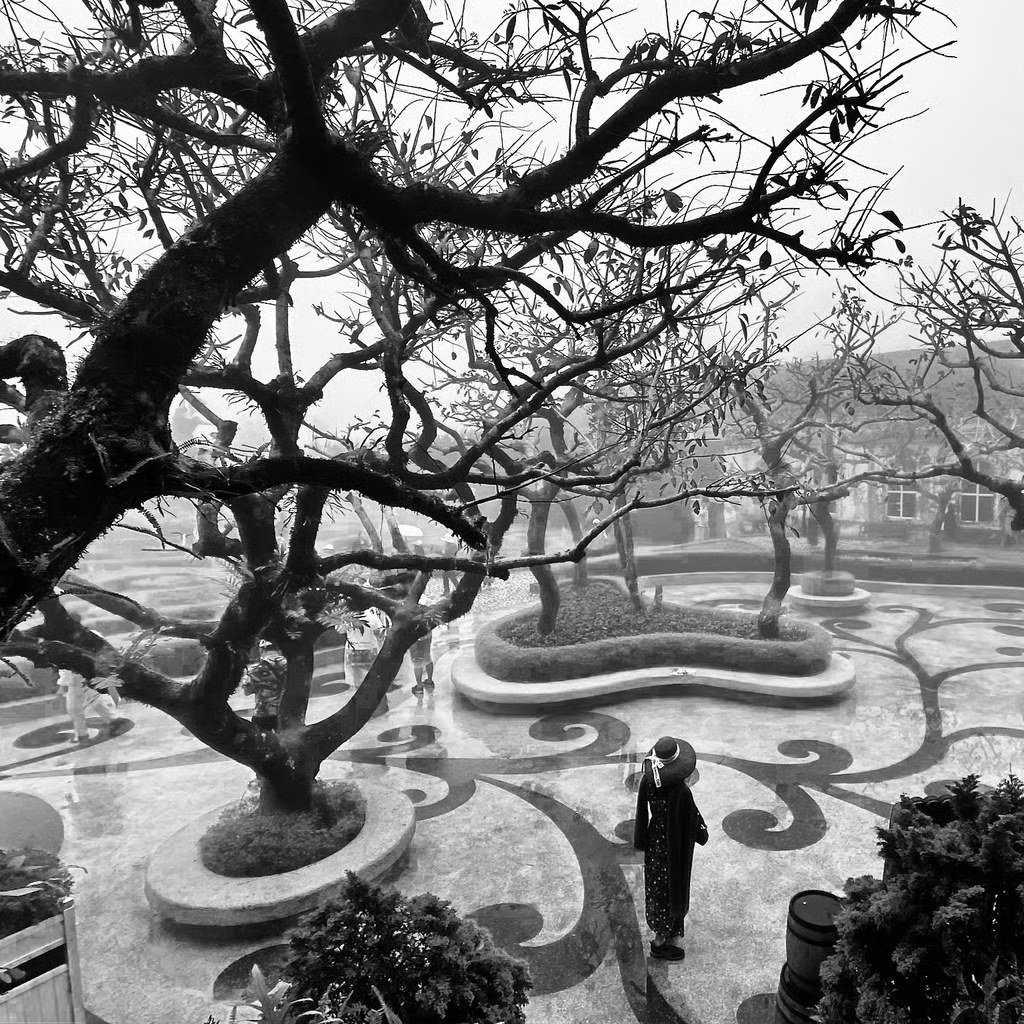
Photography is another of Parichad's largely unannounced talents. She has an instinctive eye for composition and often sees a scene in a completely different way.
On a misty day in Vietnam, she looked down into a courtyard and noticed something others might easily have walked past: bare trees disappearing into the mist, their dark branches framing a solitary figure below.
Perhaps that says something about Parichad. She notices things.
For all the stages, audiences and experiences that have been part of her life, Parichad has remarkably little interest in impressing anyone. She is private, unassuming and extraordinarily generous. Her Buddhist faith is important to her, expressed less through words than through the way she lives — visiting the temple, making merit, caring for family and helping people whenever she can.
She has style without needing attention, ability without needing recognition, and a generosity that asks for very little in return.
Home, family, music, the dogs, something growing in the garden and perhaps somewhere new to discover tomorrow.
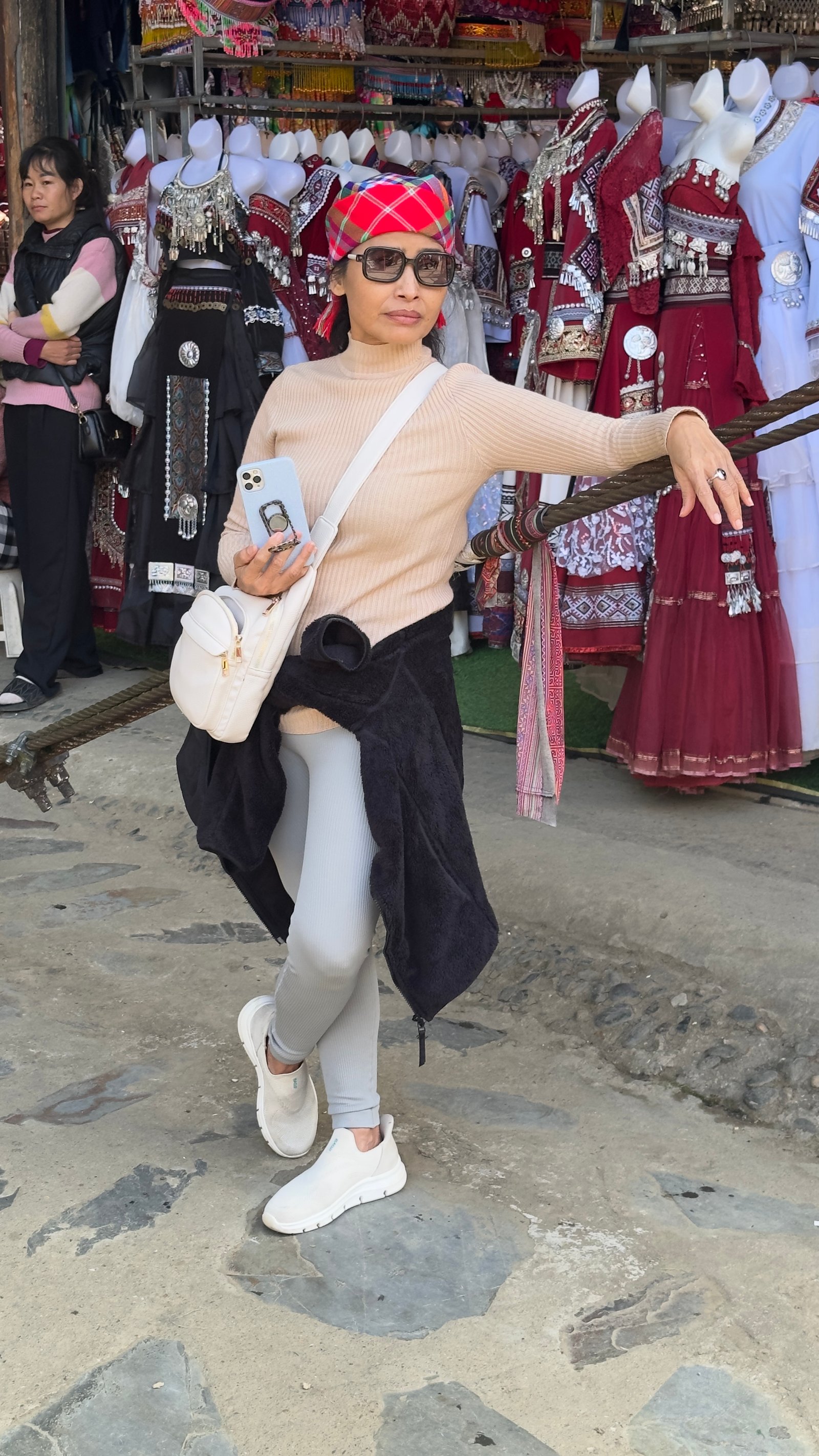
Away from music, Parichad is happiest at home in Thailand. Family matters enormously to her, as do Dinky and NooDee, two thoroughly spoiled little dogs who make leaving home for very long surprisingly difficult.
She likes peace and doesn't need a house full of people, but family are always welcome. Caring for people seems to come naturally — making sure everyone is comfortable, everyone is fed, and quietly noticing what needs doing before anybody thinks to ask.
Perhaps the first thing people notice about Parichad is her smile. It is rarely far away. And when something really makes her laugh, laughter seems to take possession of her completely. There is something else equally characteristic: she simply doesn't speak badly of people. Kindness isn't something Parichad talks about very much. It's simply how she treats people.
And Parichad is rarely still. She gardens, repairs things, looks after the house and turns her hand to almost anything — she has an extraordinary practical confidence and seems happiest when there is something to do.
She also loves getting out and discovering somewhere new: a coffee shop, a small restaurant, an historic place or simply somewhere interesting to wander with a camera.
STORIES FROM A LIFE IN MUSIC
Long before Sessions on the Green®, Parichad spent several years singing with an all-girl band in Thailand. It was a very different world from the mythology that sometimes surrounds bands on the road. These were fairly traditional young Thai girls, working, performing and trying to entertain an audience — not auditioning for a Thai remake of The Rolling Stones Story.
One day their manager arrived with something rather special: a new microphone.
It had cost around 20,000 baht, a considerable amount of money in Thailand more than twenty years ago, and Parichad still remembers the first time she sang through it. Until then, the band had been using inexpensive microphones. Suddenly she could hear her own voice properly.
The difference, she remembers, was extraordinary.
Unfortunately, at a festival in Nakhon Pathom, the microphone was shortly to demonstrate another of its qualities.
One of the younger girls was performing alone when a man climbed onto the stage and began grabbing at her. He wasn't simply an overenthusiastic admirer. He frightened her. By the time she got backstage she was visibly shaken.
Parichad saw what had happened.
“Don't worry,” she told her.
Then she picked up the new 20,000-baht microphone and went out for her own performance.
Sure enough, the man climbed onto the stage again.
He approached Parichad and attempted the same thing.
This proved to be a miscalculation.
Parichad was older than the other singer, rather more worldly, and considerably less inclined to tolerate him. As he came within reach, she swung the microphone and hit him over the head with it.
There was one technical detail nobody had anticipated.
The microphone was still live.
The impact went straight through the sound system.
THUMP.
Parichad remembers the resulting noise exploding through the festival speakers. Twenty thousand baht, it turned out, bought not only excellent vocal reproduction but remarkably effective amplification of a microphone connecting with a man's skull.
The gentleman's enthusiasm for joining the performers onstage diminished immediately.
There was another complication. He wasn't an anonymous nuisance. He was apparently well known locally and, according to Parichad, was the son of an important local police officer. He had the confidence of somebody accustomed to believing that ordinary rules might not apply to him.
They did that evening.
The story spread. Instead of Parichad being condemned for what she'd done, the man found himself publicly mocked and embarrassed for his behaviour. Parichad, meanwhile, acquired something approaching folk-hero status among people who knew what had happened.
And the band's manager?
He had just watched his expensive new microphone — a microphone costing an extraordinary amount of money for the time — being used as percussion equipment against somebody's head.
He wasn't angry.
Apparently, he thought the circumstances justified the unusual treatment of company property.
The microphone survived.
So did the man.
And, according to Parichad, he never bothered the girls again.
For messages, music enquiries and correspondence.
Contact Parichad ↗87 recordings


